Lowering a building’s carbon footprint doesn’t always start with rooftop solar panels or switching to electric cars. Some of the biggest wins are hidden inside your heating and ventilation system (HVAC). The right air filters don’t just clean the air—they save energy, cut emissions, and boost well-being.
The Hidden Energy in Filtration
Moving air through filters is surprisingly energy-hungry. According to ASHRAE, a US engineering society, 8–12% of fan energy in commercial buildings is spent pushing air through filters.
The fix? Smarter filter choice. Switching to filters with lower pressure drop can cut fan energy demand by 5–15%, preventing hundreds of kilograms of CO₂ emissions per building each year.Example: an office in Tallinn upgraded from a standard ePM2.5 50% filter (Eurovent Class C) to an optimized ePM2.5 55%filter (Class B). The result? 1 MWh less fan energy annually, avoiding around 500 kg of CO₂—the same as driving 3,000 km in a petrol car.
Balancing Clean Air and Energy Use
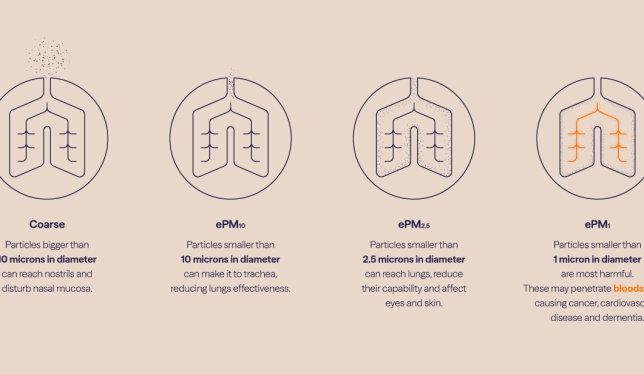
High-efficiency filters (like ePM1 or high MERV) are essential for capturing fine pollutants—traffic soot, allergens, even microbes. But efficiency often means higher airflow resistance.The smart approach is balance:
- EN ISO 16890 standard ensures filters are tested for real-world conditions (ePM1, ePM2.5, ePM10 particles).
- Eurovent 4/21 classifies filters based on lifecycle energy use, from A+ to E. Independent tests show A and B filters can cut average pressure drop by up to 15% compared to Class C—while still protecting people with more than 50% ePM2.5 efficiency.
Lifecycle Carbon Savings
The biggest air filtration cost is in operation. 75–85% of a filter’s total carbon footprint comes from the energy needed to move air through it. Manufacturing, transport, and disposal are minor in comparison.That means a filter with 20% lower average pressure drop can reduce lifecycle CO₂ by 25–35%. These real life results are backed by ISO 14040/14044 life-cycle assessments.
Maintenance Makes the Difference
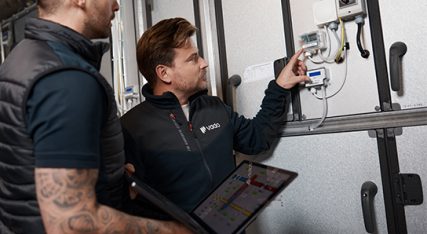
Even the best filter wastes energy if it runs in too long. As dust builds up, pressure drop rises and fans work harder. Smart maintenance is based on data, not guesswork.
- Replace filters when they hit air pressure of 150 Pa, not just by time.
- Field trials show this approach saves 4–6% fan energy annually.
A city-center shopping mall needed replacements every 5 months. A suburban school? Nearly 12 months. One-size-fits-all schedules mean wasted energy and money. Find a solution that matches your property and its surroundings.

Smarter HVAC With Controls
Filters unlock their full potential when paired with intelligent ventilation units:
- Variable-speed fans
- CO₂ and PM sensors
- Demand-controlled ventilation (DCV)
Together, these strategies can slash HVAC energy use by 20–25% compared to constant-speed operation. Lower bills come with fewer emissions.
Beyond Energy: Health and Productivity
Energy-efficient filtration pays off in more than carbon. Cleaner air drives healthier, more productive workplaces.
- A 20 µg/m³ drop in PM2.5 air particles has been linked to 1.5% fewer sick days and 0.8% higher cognitive scores in office studies.
- In high-occupancy buildings, financial gains from reduced absenteeism and sharper thinking often outweigh the energy savings.
Practical Steps for Property Managers
- Choose smart: Look for Eurovent 4/21 ratings A+ to B with the right ePM class for your building. Our consultants can help you to determine the optimal match.
- Track performance: Monitor pressure drop, don’t rely on fixed schedules only.
- Think full lifecycle: Focus on operational energy, not just purchase price.
- Integrate systems: Pair efficient filters with variable-speed fans and demand controls.
Air filters may be invisible, but their impact isn’t. By choosing energy-efficient filtration, you can cut carbon emissions, save money, and create healthier spaces for everyone inside.
///
Abbreviations
ASHRAE – American Society of Heating, Refrigerating and Air-Conditioning Engineers
CO₂ – Carbon Dioxide
DCV – Demand-Controlled Ventilation
EN ISO 16890 – International Standard for air filter classification
Eurovent 4/21 – European energy efficiency classification for air filters
HVAC – Heating, Ventilation, and Air Conditioning
ISO 14040/14044 – Standards for life-cycle assessment (LCA)
MERV – Minimum Efficiency Reporting Value
PM – Particulate Matter by size (e.g., PM1, PM2.5, PM10)